
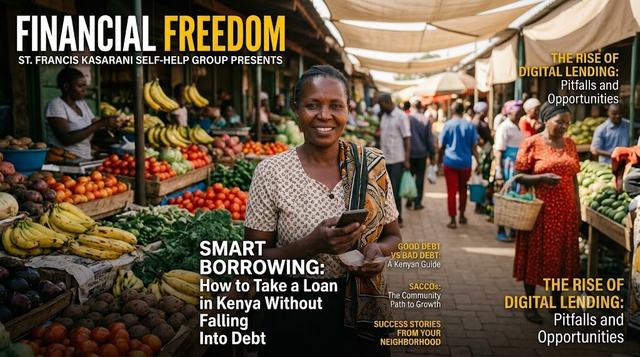
Taking a loan can be a powerful stepping stone toward financial freedom, whether you are looking to expand your biashara (business), pay school fees, or purchase a plot of land. However, in Kenya’s fast-paced financial ecosystem—where credit is as close as a tap on your smartphone—it is incredibly easy to fall into a debt trap.
Between mobile banking apps, digital lenders, Chamas, and SACCOs, the choices are endless. The secret to financial survival isn't avoiding credit altogether; it is mastering the art of smart borrowing.
Here is your comprehensive guide on how to take a loan in Kenya wisely and keep your financial health perfectly intact.
1. Good Debt vs. Bad Debt: What’s the Difference?
Before you dial that USSD code or fill out a loan application form, you must understand what kind of debt you are taking on. Not all loans are created equal.
- Good Debt: This is an investment that grows in value or generates a steady stream of income. Examples include a SACCO development loan to buy land, cash injected into a profitable business, or financing for higher education. Good debt eventually pays for itself.
- Bad Debt: This involves borrowing money to buy things that lose value instantly or do not generate income. Taking a mobile loan to fund a weekend out, buy luxury clothes, or purchase the latest smartphone falls squarely under bad debt. If it drains your wallet without a plan to refill it, avoid it.
2. When to Borrow vs. When Not to Borrow
Timing and purpose are everything. Ask yourself hard questions before signing on the dotted line.
When it Makes Sense to Borrow:
- Business Expansion: You have an existing, proven business model and need capital to stock up or scale.
- Clearing Appreciating Assets: Investing in a long-term asset like property or farming infrastructure.
- Unavoidable Emergencies: Critical medical emergencies or urgent school fees where a solid repayment plan is already in place.
Easy digital access makes impulse borrowing tempting—always have a plan first.
When You Should Absolutely NOT Borrow:
- To Pay Off Another Loan: Using a new digital loan to pay off an old one is a fast track to being blacklisted by the Credit Reference Bureau (CRB).
- To Finance a Lifestyle: If your regular income cannot support your daily expenses, a loan will only worsen the structural issue.
- On Impulse: Just because your mobile money menu says "You qualify for a limit of KSh 20,000" does not mean you need to take it.
3. Choosing Affordable Credit in Kenya
Kenya has a diverse credit market, but the cost of loans varies wildly. As a smart borrower, you need to shop around for the best interest rates and terms.
Credit SourceAverage Interest Rates & CostsBest Used ForSelf-Help Groups & ChamasVery low to flexible rates; often returns dividends.Community-backed projects, emergency cash, structural growth.SACCOsTypically low (9% to 15% per annum) on a reducing balance.Long-term development, land purchase, school fees.Commercial BanksModerate to high (pegged on the Central Bank Rate + risk premium).Major business loans, asset financing, mortgages.Digital & Mobile LendersHigh to extreme (often 15% to 40% per month when annualized).Strict, ultra-short-term emergencies only.
Always look beyond the surface. Ask providers for the Total Cost of Credit (TCC), which includes hidden fees like processing charges, insurance costs, and excise duty.
4. Crafting a Foolproof Loan Repayment Plan
Never take a loan hoping that "things will work out" by the time the due date arrives. A smart borrower creates a repayment blueprint before the money hits their account.
- Calculate Your Debt-to-Income Ratio: Ensure your total monthly loan repayments do not exceed 30% to 35% of your net monthly income.
- Automate Your Savings and Payments: Set up standing orders immediately after your salary or business revenue comes in. If you are a member of a self-help group or SACCO, treat your loan repayment like an emergency bill.
- Build an Emergency Cushion: Life happens. A sudden drop in business or a family emergency shouldn't mean missing your loan installment. Keep at least one to two months’ worth of repayments safely tucked away in an emergency fund.
Secure Your Financial Future with St. Francis Kasarani SHG
True financial freedom comes from community-driven growth. By borrowing through structured platforms like the St. Francis Kasarani Self-Help Group, you access affordable credit terms, supportive financial advice, and a community dedicated to seeing you thrive without the stress of predatory lending.
Borrow to build, not to consume!